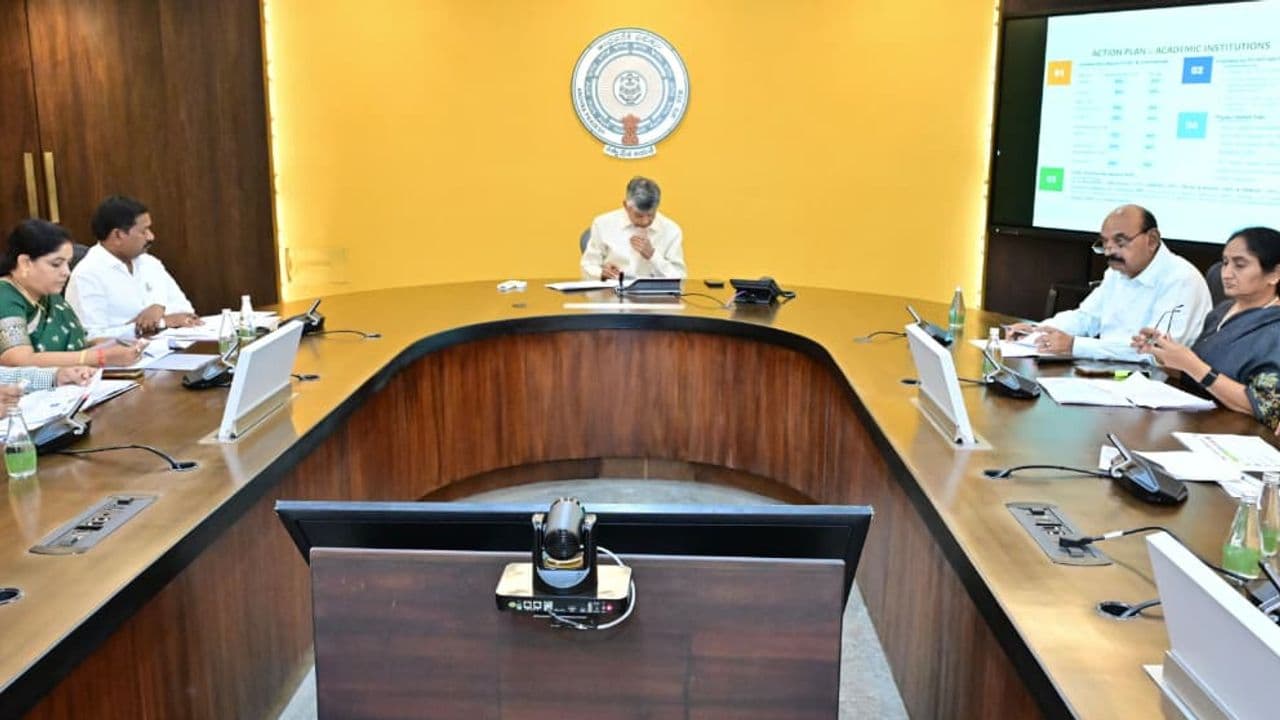
Amaravati: Chief Minister N. Chandrababu Naidu on Tuesday announced a 10 percent increase in diet charges for students studying in government hostels and Gurukul institutions, directing officials to implement the revised rates from the second quarter of the current financial year despite financial constraints.
Reviewing the Welfare Department at the Secretariat, the Chief Minister said investment in education is the most effective way to transform the lives of students belonging to Backward Classes (BC), Scheduled Castes (SC), Scheduled Tribes (ST) and Minority communities.
Rejecting a proposal from the Finance Department to defer the enhancement, Chandrababu Naidu instructed officials to implement the revised diet charges immediately from the second quarter, stating that the welfare of students should not be compromised.
The Chief Minister stressed that students studying in welfare institutions must receive education comparable to the best private schools and directed officials to establish more Gurukul institutions across Andhra Pradesh. He said future investments should focus on Gurukuls instead of conventional hostels and asked officials to study the benefits of adopting the Net Zero model in residential schools.
He suggested developing Gurukul campuses on the lines of biodiversity parks with modern infrastructure and better learning environments. To improve facilities in welfare institutions, the government has allocated Rs.100 crore for maintenance and infrastructure development in hostels and residential schools.
Chandrababu Naidu also directed officials to establish special coaching programmes to prepare meritorious students for higher education and competitive examinations, including IIT, NIT and NEET. He instructed departments to recruit the best teachers for coaching and strengthen academic support systems in welfare institutions.
The Chief Minister called for greater public participation in the education sector by encouraging Non-Resident Indians (NRIs) to adopt welfare hostels. He also suggested creating strong alumni networks for hostels, Gurukuls, residential schools and Ashram schools while involving professionals willing to provide educational and medical services voluntarily.
Emphasising that welfare should go beyond financial assistance, Chandrababu Naidu said government programmes must improve livelihoods and income generation for weaker sections. He directed officials to ensure that schemes such as SASKI, Poorvodaya and VBG Ram G effectively benefit disadvantaged communities.