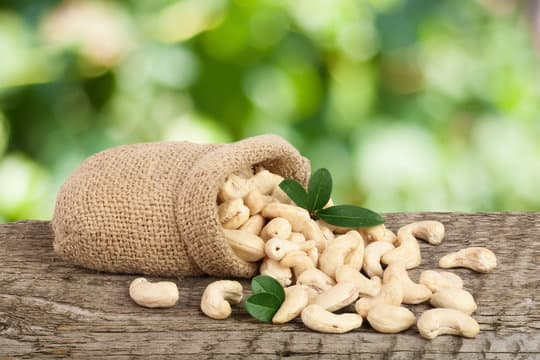
The Tirumala Tirupati Devasthanams (TTD) has returned nearly 12 tonnes of cashew nuts procured through the Girijan Cooperative Corporation (GCC) in Parvathipuram Manyam district, after samples failed to meet the quality specifications prescribed by the temple administration.
The rejection has brought renewed attention to the quality-control mechanisms governing the procurement of ingredients used in the preparation of Srivari Laddu and other prasadam and annaprasadam at Tirumala.
Officials collected samples from the consignment brought to a TTD warehouse and subjected them to tests at the food analysis laboratory in Tirumala. According to officials, the samples did not conform to the quality parameters specified in the tender conditions. The consignment was subsequently sent back.
The development comes against the backdrop of Chief Minister N. Chandrababu Naidu’s instructions to maintain stringent quality standards in ingredients used by the TTD. The administration has been tightening quality checks on food materials following concerns over the quality of ingredients used in temple prasadam.
Advanced laboratory steps up testing
The TTD has strengthened its food-testing infrastructure with an advanced laboratory established with the support of the Food Safety and Standards Authority of India (FSSAI).
The laboratory, inaugurated by Mr. Naidu in March, is equipped to conduct a range of tests covering food safety and quality parameters. Around 30 personnel are working at the facility, which has the capacity to examine about 1,500 samples a month, according to the information provided by officials.
The laboratory can test parameters including fatty acids, pesticide residues, volatile substances, mycotoxins, pharmaceuticals and food additives.
Officials say consignments are cleared for use in prasadam and annaprasadam preparation only after they pass the prescribed quality tests. Materials that fail to meet the required standards are rejected.
The TTD has also been directed to explore the use of blockchain technology to strengthen traceability and monitoring of food ingredients.
Cashew a major crop in Manyam region
Cashew is among the important crops cultivated in the tribal areas of Parvathipuram Manyam district. According to the information provided by the authorities, cashew plantations cover about 58,146 acres in the Parvathipuram ITDA area and 46,408 acres in the Seethampeta ITDA area.
Thousands of tribal households depend on cashew cultivation for their livelihood.
The State government had established a cashew processing unit in Parvathipuram at an estimated cost of ₹1 crore, with the stated objective of procuring raw cashew directly from farmers, processing it and supplying quality-graded cashew to temples.
Efforts were also made to establish procurement mechanisms at the village level. However, difficulties in sourcing the required quantities directly from farmers reportedly led officials to depend on traders.
Questions over local quality checks
The rejection of the consignment at Tirumala has raised questions about the quality-control process followed before the cashew was transported from Parvathipuram.
Cashew supplied to the TTD is required to meet specifications relating to size, grading, moisture content, whole kernels and broken pieces, among other parameters.
Against this backdrop, questions have been raised over whether adequate quality testing was conducted locally before the consignment was dispatched to Tirumala.
Officials have indicated that the consignment was sent from the ITDA area on a holiday. While the material was subsequently rejected following tests at Tirumala, the precise reasons for its failure to meet the prescribed specifications have not been publicly detailed.
Parvathipuram ITDA Assistant Project Officer Muralidhar confirmed that the cashew sent to Tirumala was returned.
Tribal farmers caught between traders and procurement system
The episode has also highlighted the difficulties faced by tribal cashew growers in accessing organised procurement channels.
Traders reportedly provide advances to farmers in the two ITDA areas and subsequently purchase the produce from them. According to local accounts, this arrangement has weakened government-backed procurement mechanisms, including Van Dhan Vikas Yojana centres.
Farmers have been seeking a system under which government agencies procure raw cashew directly from them at remunerative prices and make payments without delay.
Such a system, they argue, would reduce their dependence on traders and help create a stable market for cashew produced in the Manyam region.
Need for stronger farm-to-processing chain
Farmer representatives and local stakeholders have also called for greater support in post-harvest management, including drying, storage and grading.
They say procurement centres at the village level need to be strengthened and quality checks should be conducted before the produce reaches processing units.
A transparent procurement chain, beginning with farmers and extending through processing, grading and final supply, could help improve both farmer returns and the quality of cashew supplied to institutions such as the TTD.
The rejection of the latest consignment has therefore emerged as an early setback to efforts to establish a supply chain for Manyam-region cashew in Tirumala’s prasadam production.
Officials are now faced with the task of ensuring that future consignments meet the TTD’s specifications at every stage, from procurement and processing to final delivery.