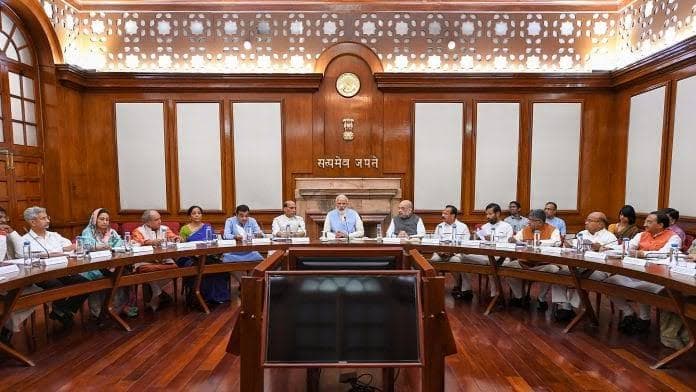
The Union Cabinet, chaired by Prime Minister Narendra Modi, has approved Phase 2A of the Ahmedabad Metro Rail Project, paving the way for a major expansion of the city's metro network. The new corridor will stretch 6.032 km from Koteshwar Road to the Airport and include five stations, of which four will be elevated and one underground. The stations planned under this phase are Ashram Road, Koteshwar Prachin Mandir, Sabarmati River, Sardar Nagar, and Airport. Upon completion, the Ahmedabad-Gandhinagar Metro network will expand to a total operational length of 77.63 km.
The total project cost, including Interest During Construction (IDC), has been estimated at ₹2,169.04 crore. The corridor is aimed at strengthening public transportation infrastructure by providing seamless metro connectivity to Ahmedabad Airport while linking several important residential and commercial areas that currently lack efficient transit options.
The project is expected to significantly enhance urban mobility by integrating key parts of the city with the existing Ahmedabad-Gandhinagar Metro corridor. Improved connectivity to the airport, along with better access to major residential and business hubs, is likely to boost economic activity, tourism, and overall ease of travel for residents and visitors alike. The corridor could also support future infrastructure development related to international sporting events such as the World Police Games 2029 and the Commonwealth Games 2030.
Officials believe the metro extension will help reduce traffic congestion by encouraging commuters to shift from private vehicles to public transport. This is expected to ease pressure on city roads, shorten travel times, and improve road safety. The project is also expected to contribute to environmental sustainability by reducing carbon emissions and promoting cleaner modes of transportation.
The expanded metro network is likely to generate substantial economic benefits by improving access to important transport hubs such as the airport, railway stations, and bus terminals. Enhanced connectivity is expected to support local businesses, attract fresh investments, and encourage development in areas that were previously less accessible.
The project is also expected to deliver significant social benefits by providing more equitable access to public transportation across different socio-economic groups. Reduced commuting times and improved connectivity to essential services are expected to enhance the overall quality of life for citizens.
In addition to its transportation benefits, the Ahmedabad Metro Phase 2A project is expected to create employment opportunities. Around 2,000 people are likely to be employed during the peak construction phase, while approximately 500 jobs are expected to be generated for the operation and maintenance of the metro system after it becomes operational. The project is seen as a key step toward supporting Ahmedabad's long-term urban growth and sustainable development goals.