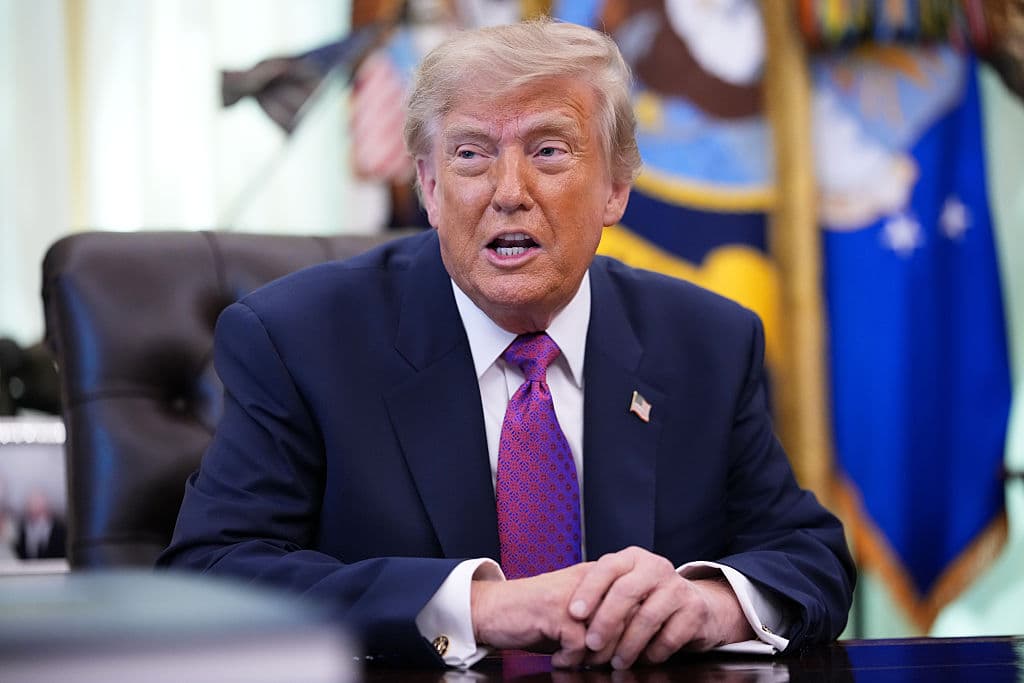
US President Donald Trump has said the United States will stop providing annual financial assistance to Israel after the end of 2026, claiming that he had reached an agreement with Israeli Prime Minister Benjamin Netanyahu. However, Trump indicated that Washington would continue selling weapons to its close Middle East ally.
Speaking to Fox News’ Fox & Friends programme on Tuesday, Trump said Israel no longer needed the financial assistance and that the decision had been agreed upon months earlier. He also suggested that ending the funding would remove an issue that left-wing Democrats had used to criticise Republicans over US support for Israel.
The announcement came on the day of the US midterm elections, in which voters were deciding whether Republicans would retain control of Congress. Analysts questioned the timing of the announcement, suggesting that it could be linked to the electoral debate over American military assistance to Israel.
Uncertainty Over Existing Aid Agreement
Trump did not explain how the proposed withdrawal would be implemented. The existing US-Israel Memorandum of Understanding provides for $3.8 billion in annual military assistance and remains in force until September 2028.
Discussions have been under way on the future of Washington's assistance to Israel beyond 2028. Netanyahu had previously indicated that he expected US aid to gradually decline over time.
Trump's statement, however, appeared to suggest that the decision to end direct annual funding had already been made. The two countries continue to face tensions with Iran, more than eight months after jointly launching attacks against the Islamic Republic.
Neither the White House nor Netanyahu's office responded to Reuters' requests for comment.
Opposition Leader Questions Netanyahu
The announcement drew criticism from Gadi Eisenkot, leader of the rival political bloc seeking to remove Netanyahu from power.
In a post on X, Eisenkot questioned why Israel's security establishment and citizens were learning about a potential change in the strategic relationship through the media. He argued that Netanyahu's handling of the relationship with Washington raised concerns and called for a change in leadership.
Israel's political situation remains uncertain following the October 27 election. Netanyahu lost his governing majority but his opponents also failed to secure a clear path to forming an alternative government. Prolonged negotiations over the formation of a new administration are expected.
US Public Opinion on Israel Shifts
American public support for Israel has declined, particularly among Democratic voters, following Israel's military campaign in Gaza after the Hamas-led cross-border attack in October 2023.
A Quinnipiac University poll conducted in June found that 48% of voters and 66% of Democrats believed the United States was too supportive of Israel. When the question was first asked in 2017, the corresponding figures were 16% and 20%.
Several candidates critical of Israel have also secured Democratic primary victories over the past year. Among them is Abdul El-Sayed, who is contesting a Senate seat in Michigan and has opposed unconditional US military assistance to Israel. If elected, he would become the first Muslim to serve in the US Senate.
Trump specifically referred to El-Sayed while explaining his decision, saying that US financial support had become a political issue for Republicans.
Debate Within Republican Camp
Criticism of Israel has also grown among sections of Trump's Make America Great Again movement. Some members have questioned Israel's influence on US policy towards Iran and expressed concern that the conflict could undermine Trump's campaign promise to avoid foreign military interventions.
The war has also contributed to higher US gasoline prices and declining approval ratings for Trump, according to the report. Polls indicate that most Americans oppose the war.
Jon Alterman of the Center for Strategic and International Studies questioned the timing of Trump's announcement, particularly amid speculation about the possibility of another major joint US-Israeli military strike against Iran.
While some US supporters of Israel have urged Trump to reconsider and gradually phase out assistance, Democratic Representative Ro Khanna said that ending aid to Israel would form part of his party's agenda if it gained control of Congress.
US Defence Cooperation May Deepen
Despite the possibility of reduced financial assistance, US-Israel defence cooperation could expand in other areas.
The US House of Representatives passed a provision in the 2027 National Defence Authorisation Act during the summer. Known as Section 219, it envisages deeper cooperation between the two countries in military technology.
However, dozens of non-governmental organisations have opposed the provision, describing the proposal as exceptionally dangerous and urging lawmakers to remove it.
Trump's announcement has therefore raised questions about the future structure of US assistance to Israel, with direct financial support potentially changing even as arms sales and defence technology cooperation continue.